LITTLElocals
Making it easier for parents to discover local activities.
The problem
Parents spend far too long searching Facebook groups, council websites, Instagram pages and Google just to answer one simple question: "What can we do with the kids today?" The information existed, but it was fragmented, outdated and hard to trust.
There was a quieter problem on the other side, too: the people running these activities — small nurseries, class providers, soft-play — had no simple, affordable way to be found.
Research
I live in Ealing, so this was a problem I felt as much as studied. I spoke to parents and to providers, and visited venues to watch how discovery actually happens — where people look first, what they don't trust, and why a good activity still goes unseen.
The pattern was clear. It wasn't a lack of activities.
The problem was discoverability.
Parents wanted one place that answered "what's on, near me, right for my child's age, today" — instantly, without ten open tabs. And providers wanted to reach those parents without paying a booking commission to a big platform.
The design approach
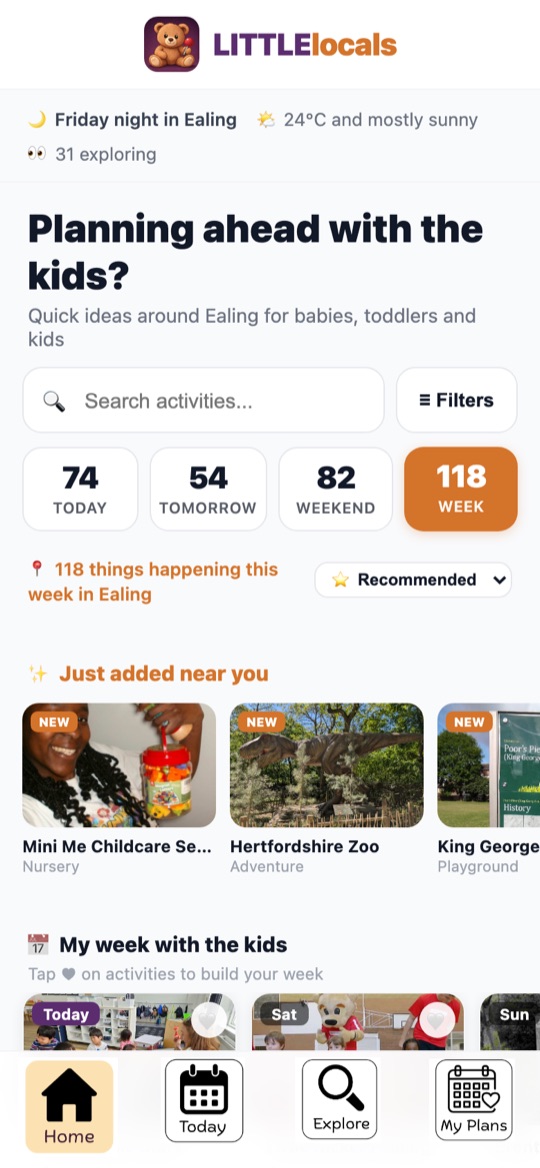
I designed LITTLElocals around a parent's real question rather than a database, so the product answers by time first and narrows from there:
The decisions that made it feel less like a directory and more like a local who knows what's on:
Time-first, not A–Z
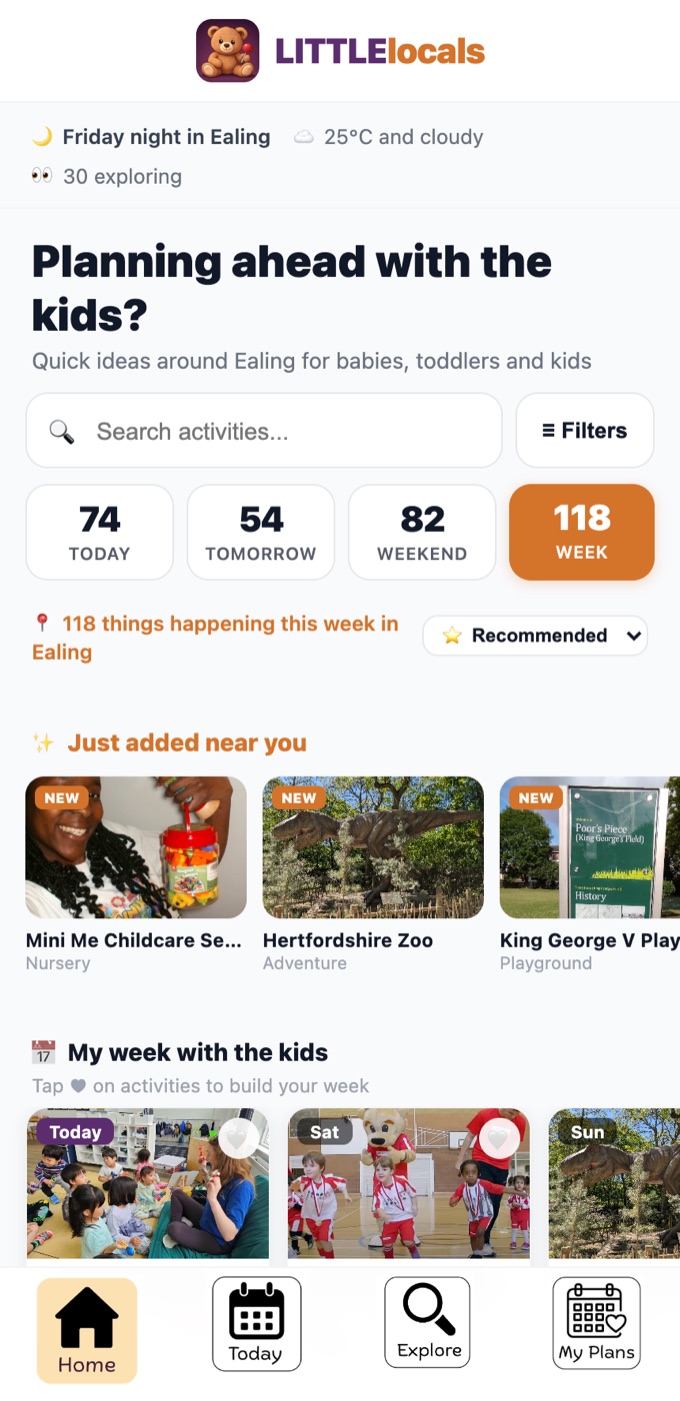
The home screen leads with Today, Tomorrow, Weekend and Week — and shifts with the time of day and the weather, so a rainy afternoon nudges indoor options. A parent doesn't browse a directory; they ask "what can we do, right now, that's actually on." The whole product is built around that question.
A different set of fields for every kind of activity
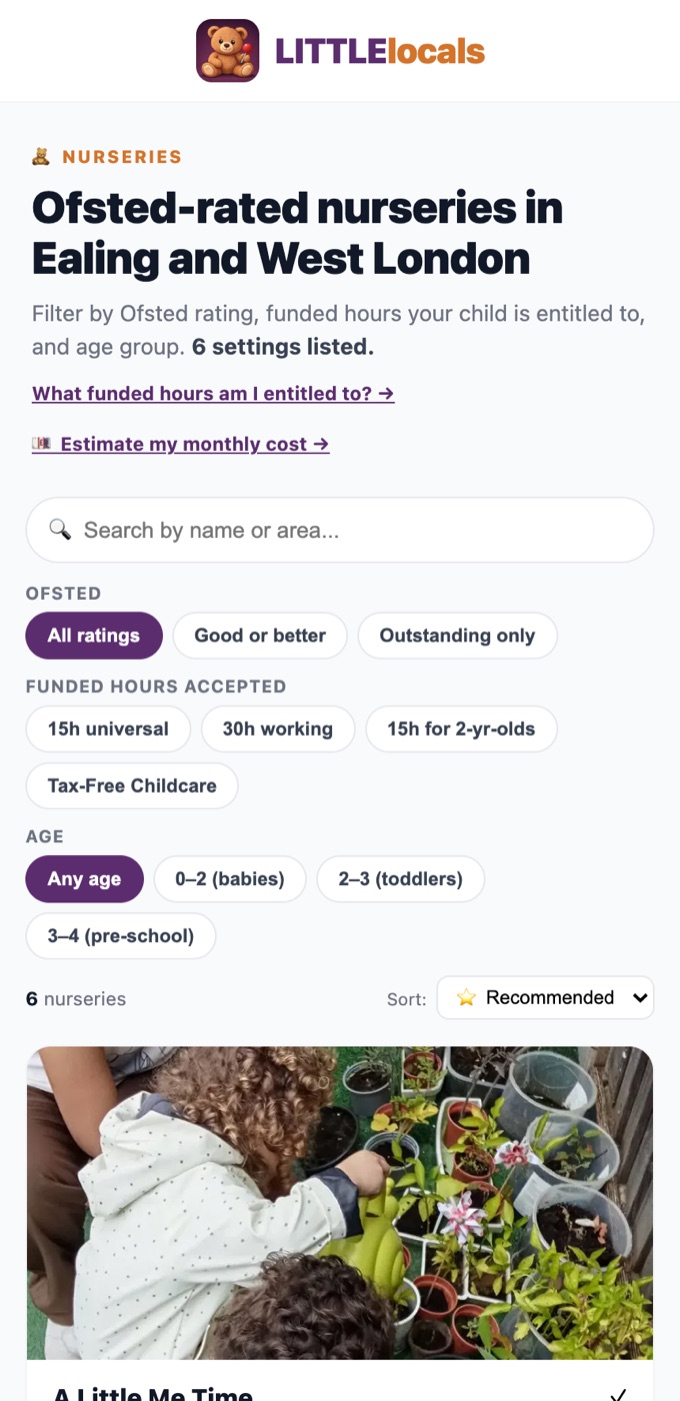
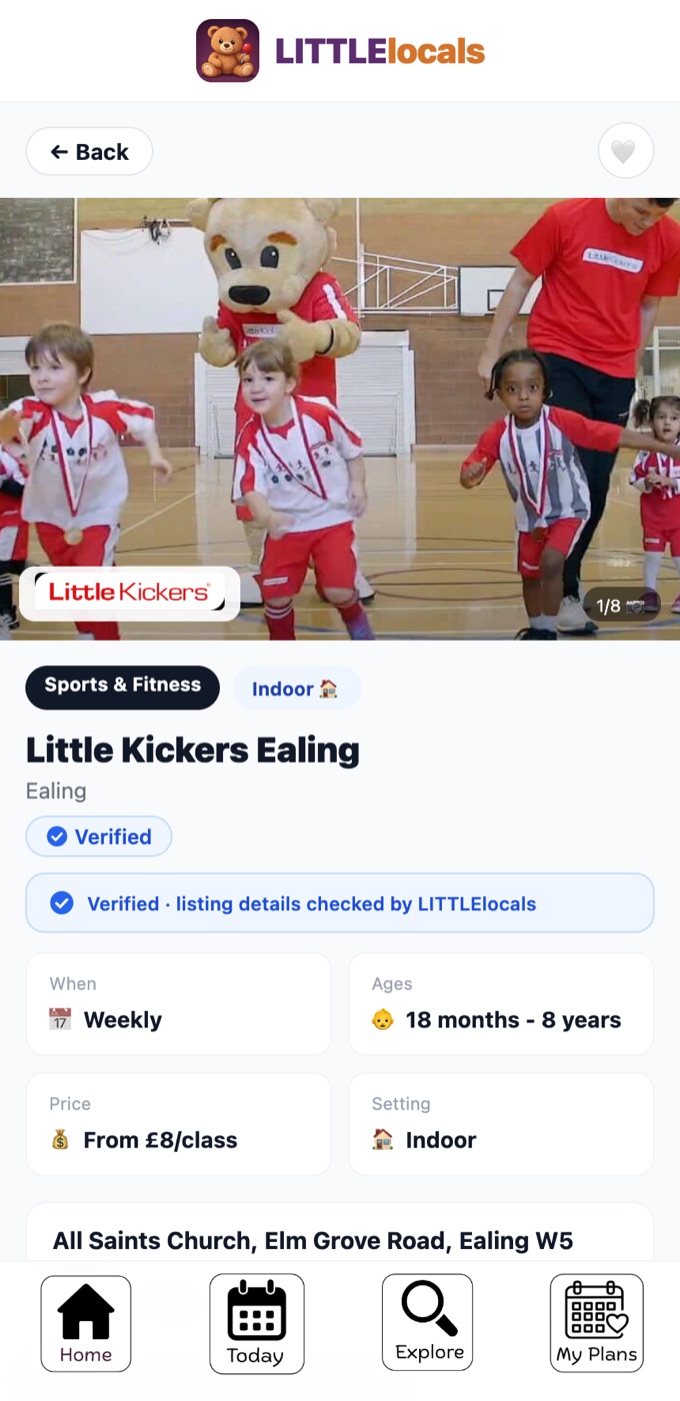
Nurseries, classes and soft play aren't judged on the same things, so I didn't give them the same listing. Nurseries surface Ofsted rating, funded hours and age band; classes surface price, age range and setting. Modelling each category's real decision criteria — in the filters and on the page — is what separates it from a generic directory.
Own the moment of intent
Early on, every "book" was an outbound link — a funnel I couldn't see or improve. So I began adding on-platform enquiries and nursery tour-requests to start capturing the lead rather than only handing it off: a clear path from referrer, to owning the lead, to owning the booking.
Build the supply side, not just the shop window
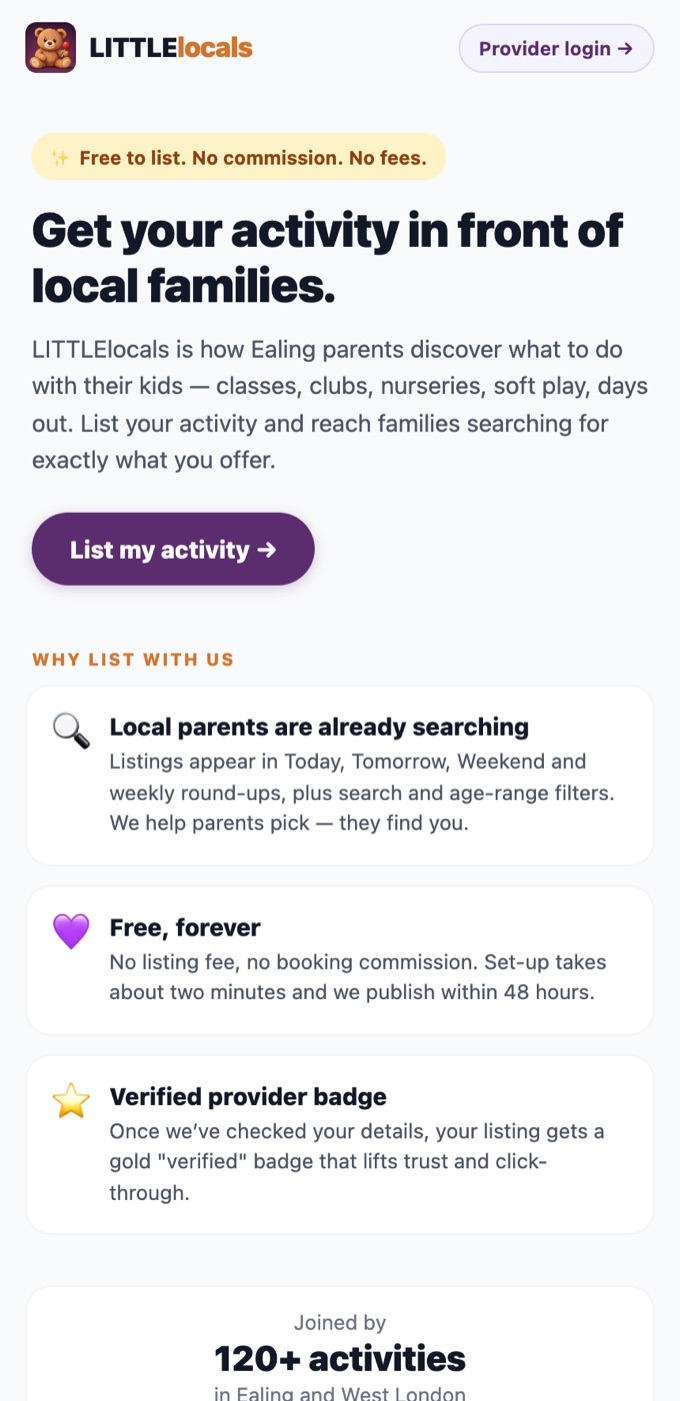
A marketplace is only as good as its supply, so I designed the provider experience with as much care as the parent one: a free, no-commission listing, a provider dashboard with a verified badge, and a fast, low-friction path to going live. The unglamorous half is what keeps it alive.
Screens
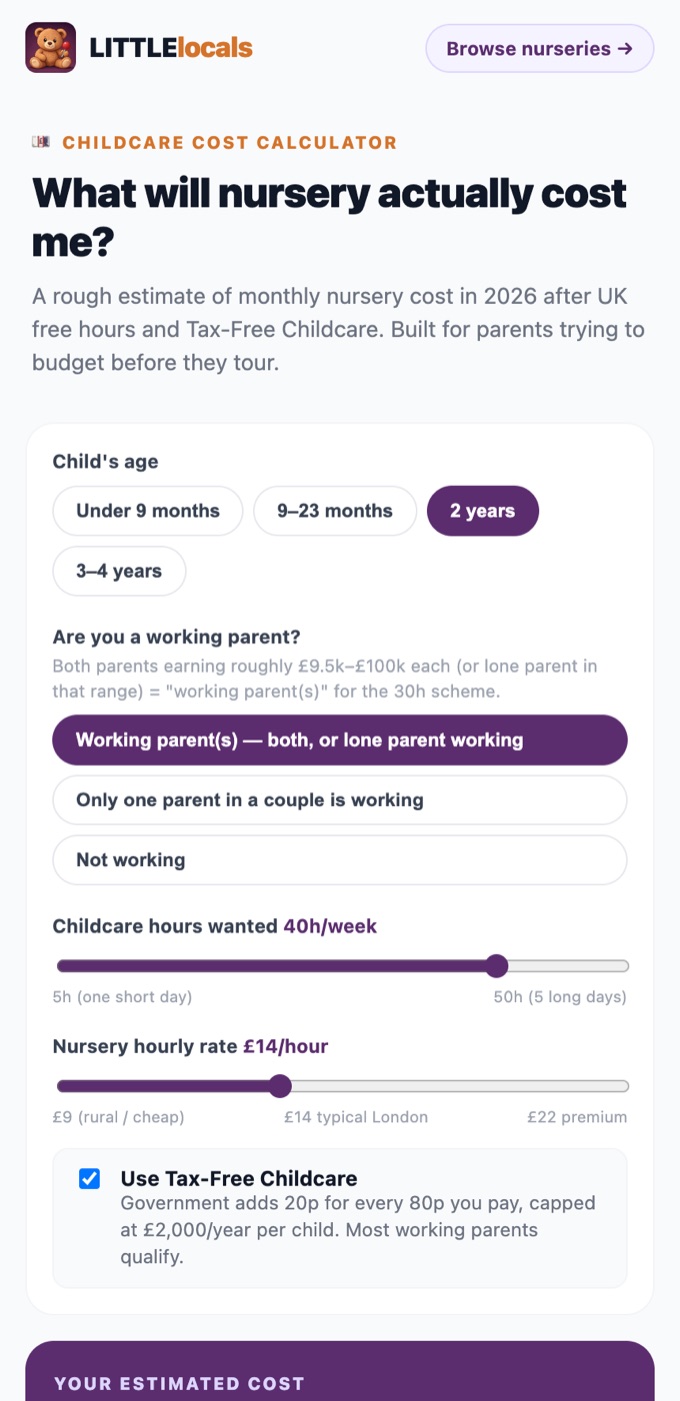
Captured live from littlelocals.uk — discovery, a category vertical, a listing, the provider side, and a parent tool.
Technical implementation
LITTLElocals is a server-rendered web app, built and run solo. Because parents mostly arrive from search, the engineering priorities were discoverability, trust and speed.
The decisions that mattered technically:
SEO as architecture, not an afterthought
Every listing is its own server-rendered page, and the sitemap is generated from the data, so a listing is discoverable the moment it's added. Discovery through Google is a first-class feature, not a plugin bolted on at the end.
Solving the cold-start trust problem honestly
A brand-new listing has no reviews, which makes it look dead. So I surface existing external ratings as a clearly-labelled stopgap, so a good provider never looks empty on day one — without pretending the reviews are ours.
A category-aware data model
Each category carries its own schema of fields on Supabase, and that single model powers both the filters and the listing page. Add a field to "nurseries" once and it flows through search, the vertical and the detail view — the data model is the product logic.
A freshness engine to keep supply alive
Behind the provider side sits an admin approval queue and a daily email nudge that prompts providers to keep listings current. A directory dies the moment it goes stale, so keeping it fresh had to be automated, not manual.
Outcome
LITTLElocals is live at littlelocals.uk with 1,500+ users and 120+ activities listed across Ealing and West London, and it keeps growing through real community work rather than ad spend.
What I learned
Building a consumer marketplace taught me that distribution is as important as the product itself.
Growing LITTLElocals meant speaking to providers, visiting venues, handing out flyers, building partnerships and listening to parents. The product became stronger because it was shaped by the community it serves — and that only happens if you go and find that community, not wait for it.